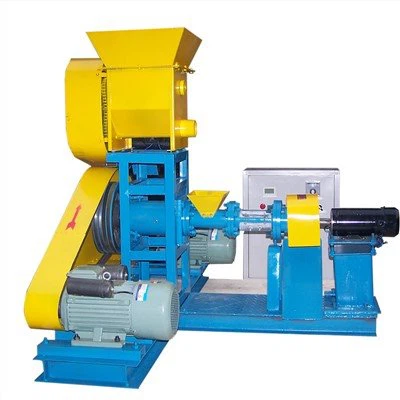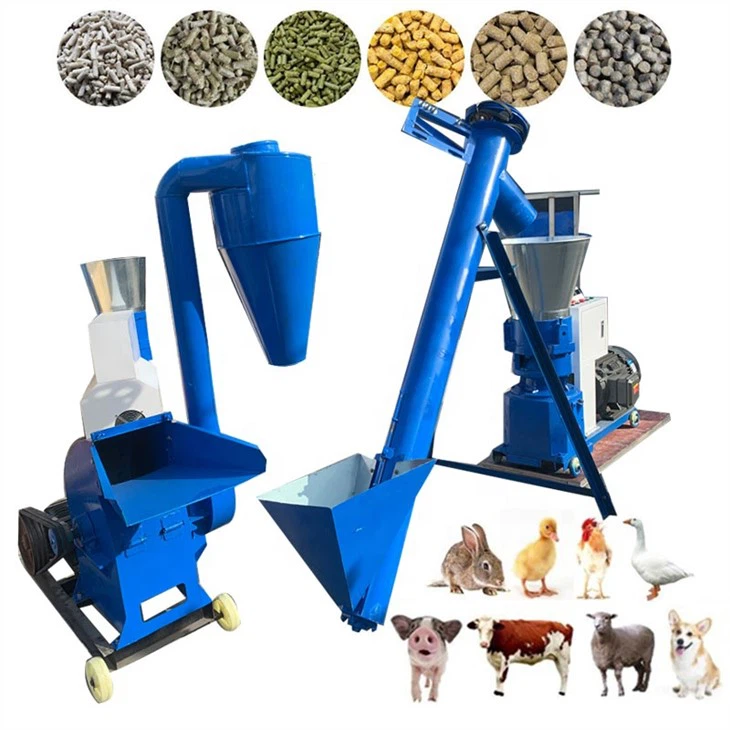
Application of Poultry Pellet Machine
Poultry pellet machines are primarily used to produce feed pellets for poultry, including chickens, ducks, and geese. They are also used to produce animal feed pellets for other farm animals such as pigs and cattle.
Poultry farmers use feed pellets because they have several advantages over loose feed:
- Pellets are more convenient to handle and transport.
- Pellets have a lower risk of contamination from bacteria or mold.
- Pellets are more palatable, which means livestock will eat more and put on weight faster.
- Pellets are formulated to be nutritionally balanced, which means that it is easier to provide animals with a complete and balanced diet.
Poultry pellet machines are also widely used in commercial animal feed production facilities and processing plants.

How to Make Feed Pellets at Home?
Making feed pellets at home requires only a few basic tools and ingredients. The following steps outline the process:
Step 1: Collect the Ingredients
Collect the ingredients that you wish to use in your feed pellets. Common animal feed ingredients include corn, wheat, soybean meal, fish meal, and vegetable oil. You may also use supplements and additives, such as vitamins, minerals, or flavors.
Step 2: Grind the Ingredients
Grind the ingredients either by hand or using a hammer mill, which is a mechanical device designed to grind materials into small particles. Ensure that the particles are of similar sizes, as this will ensure that the pellets will be of consistent quality.
Step 3: Mix the Ingredients
Mix the ingredients together in a large container or mixer. Add water or steam if desired to form a moist mixture. Ensure that the mixture is well-mixed and homogeneous.
Step 4: Make the Pellets
Place the mixture in the poultry pellet making machine and turn on the machine. The machine will compress the mixture and produce small pellets of uniform size. Collect the pellets in a container or bag.
Step 5: Dry the Pellets
Place the pellets in an oven or dryer, and dry them to a moisture content of between 10-15%. Allow the pellets to cool, and then store them in a cool, dry place.

What are the Parameters of the Machine?
The parameters of a poultry pellet machine depend on the particular model, but they typically include:
- Power supply: 220V or 380V
- Power consumption: 3-60kW
- Pellet size: 1.5-12mm
- Capacity: 50-2000kg/h
- Material: Carbon steel or stainless steel
- Warranty: 1-3 years
- Dimensions: 1200 x 600 x 1000mm (L x W x H)
- Weight: 100-1000kg
What Payment Terms are Supported?
The payment terms supported by manufacturers of poultry pellet machines vary, but they usually include:
- Bank transfer
- Credit card
- PayPal
- Western Union
- Trade assurance
Manufacturers may also offer financing options, such as payment plans or leasing arrangements, for customers who wish to spread the cost of their purchase over time.
Conclusion:
Poultry pellet making machine is a crucial piece of equipment for poultry farmers and commercial animal feed producers. It allows for the production of high-quality, nutritionally balanced feed pellets that are easier to handle, transport and store. With basic knowledge and equipment, farmers can also produce their own feed pellets at home for personal use. We hope this article has been informative and helpful for those interested in poultry pellet machines.
Model | Power puissance | Capacity(feed)(kg/h) | Capacity(fuel)(kg/h) | Weight(kg) | Size(mm) |
WSKL-125 | 2.2kw-3kw | 75-100 | 40-60 | 75kg | 650*300*600mm |
WSKL-150 | 3kw | 90-120 | 70-80 | 95kg | 750*400*820mm |
WSKL-200 | 7.5kw | 200-300 | 100-150 | 110kg | 900*400*750mm |
WSKL-230 | 11kw | 300-400 | 200-300 | 150kg | 1180*580*880mm |
WSKL-260 | 15kw | 400-600 | 300-400 | 135kg | 1200*500*1070mm |
WSKL-300 | 22kw | 600-800 | 500-600 | 220kg | 1250*520*1070mm |
WSKL-360 | 22kw | 800-900 | 700-800 | 350kg | 1270*520*1070mm |
WSKL-400 | 30kw | 1000-1200 | 800-1000 | 600kg | 1470*500*1150mm |
Tagiau poblogaidd: poultry pellet making machine, China poultry pellet making machine suppliers, factory